
Scott Lincicome and Alfredo Carrillo Obregon
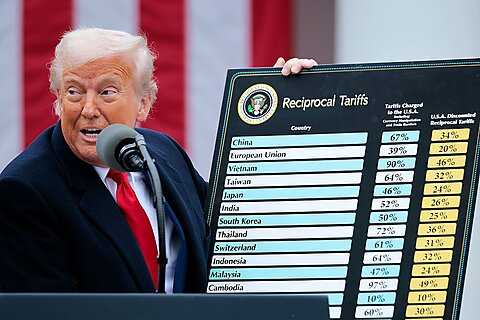
Back in December, we showed how measures imposed by the Trump administration in 2025 have made the US tariff system excessively convoluted and complex, and in the last few weeks, the situation has only worsened. Regardless of what the Supreme Court does with Trump’s “emergency” tariffs, moreover, US tariff red tape will likely grow more this year, burdening US companies and the economy in the process.
First, the number of US tariff legal regimes has already increased from 18 in December 2025 to 20 in January 2026, as Section 301 tariff measures addressing China’s interventions in the semiconductor industry and Nicaragua’s labor and human rights practices were finalized in December (though tariffs won’t be imposed on the targeted products until 2027). (See Figure 1).
Second, as of September 2025, more than half of all US imports (by value) were subject to one or more special tariff measures (i.e., classified in Chapter 99 of the Harmonized Tariff Schedule of the United States) and to the associated bureaucracy (Figure 2). This is a higher share than we previously reported.
By the end of 2025, the number of tariff-related measures that modified the US tariff code reached 50. As depicted in Figure 3, seven additional measures modifying the 2026 US tariff code have already been codified.
Last, the number of customs rulings issued in 2025 (i.e., binding interpretations on the tariff classification of a specific product issued by US Customs and Border Protection (CBP) upon request from an importer) increased to more than 2,100 through mid-December (Figure 4). This measure is indicative of the confusing changes to US tariff policies and the federal government’s aggressive enforcement actions in 2025.
As Scott Lincicome wrote last year, the unprecedented increase in tariff red tape is a large, hidden cost on American companies—particularly small businesses that do not have the resources to navigate this system or suddenly find themselves on the hook for thousands of dollars due to innocent classification or compliance mistakes.
The Supreme Court’s forthcoming decision in the Learning Resources Inc. et al. v. Trump case could significantly reduce the complexity of the US tariff system if the Court invalidates the Trump administration’s IEEPA tariffs. Such reprieve, however, would likely be temporary because the Trump administration has pledged to replicate the IEEPA regime through other executive tariff authorities, including through both Sections 232 and 301 measures, and previously unused statutes such as Section 122 of the Trade Act of 1934 and Section 338 of the Tariff Act of 1930. (Though, such authorities arguably have more built-in procedural and/or substantive checks than IEEPA does.) This system, in fact, might be even more complex than what we have right now.
It will therefore remain the case that a true reduction in tariff red tape will only be accomplished through congressional action to revise various US trade laws and reclaim the legislative branch’s constitutional authority over tariffs.